

On November 3, 2026, Florida voters approved Amendment 3 with about 62% of the vote, clearing the 60% threshold needed to change the state constitution. It is the biggest change to Florida's homestead exemption in nearly two decades, and it starts January 1, 2027.
If you own a primary home in South Florida, or you're planning to buy one, this affects what you'll pay in property taxes for years to come. Here's what changed, the dates that matter, and exactly what you need to do (if anything).
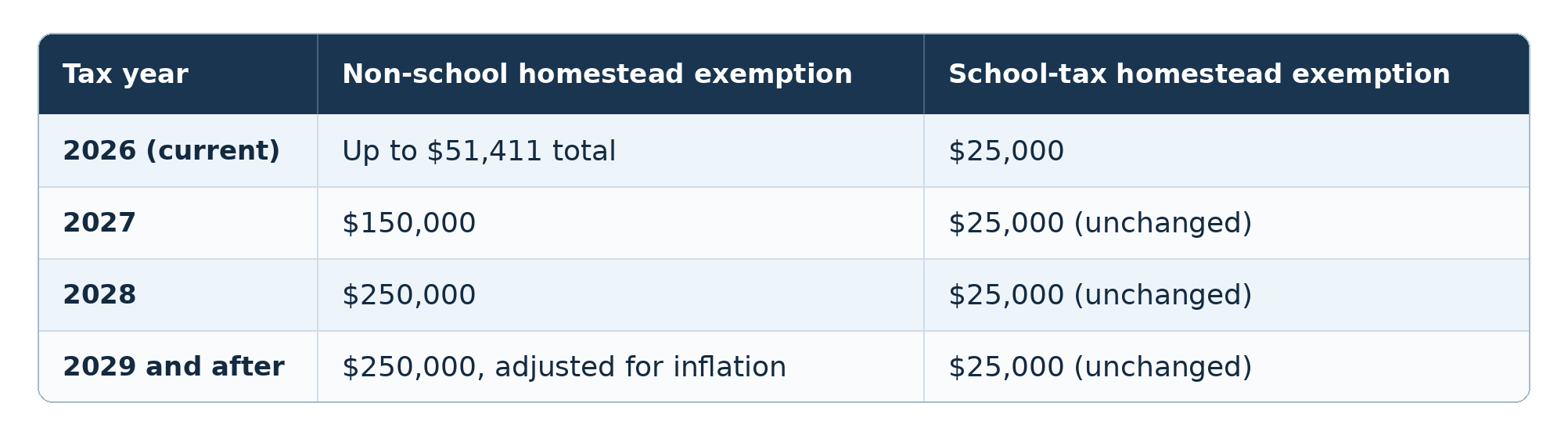
What Amendment 3 Changes
Source: Broward County Appraiser’s Website
A few important details:
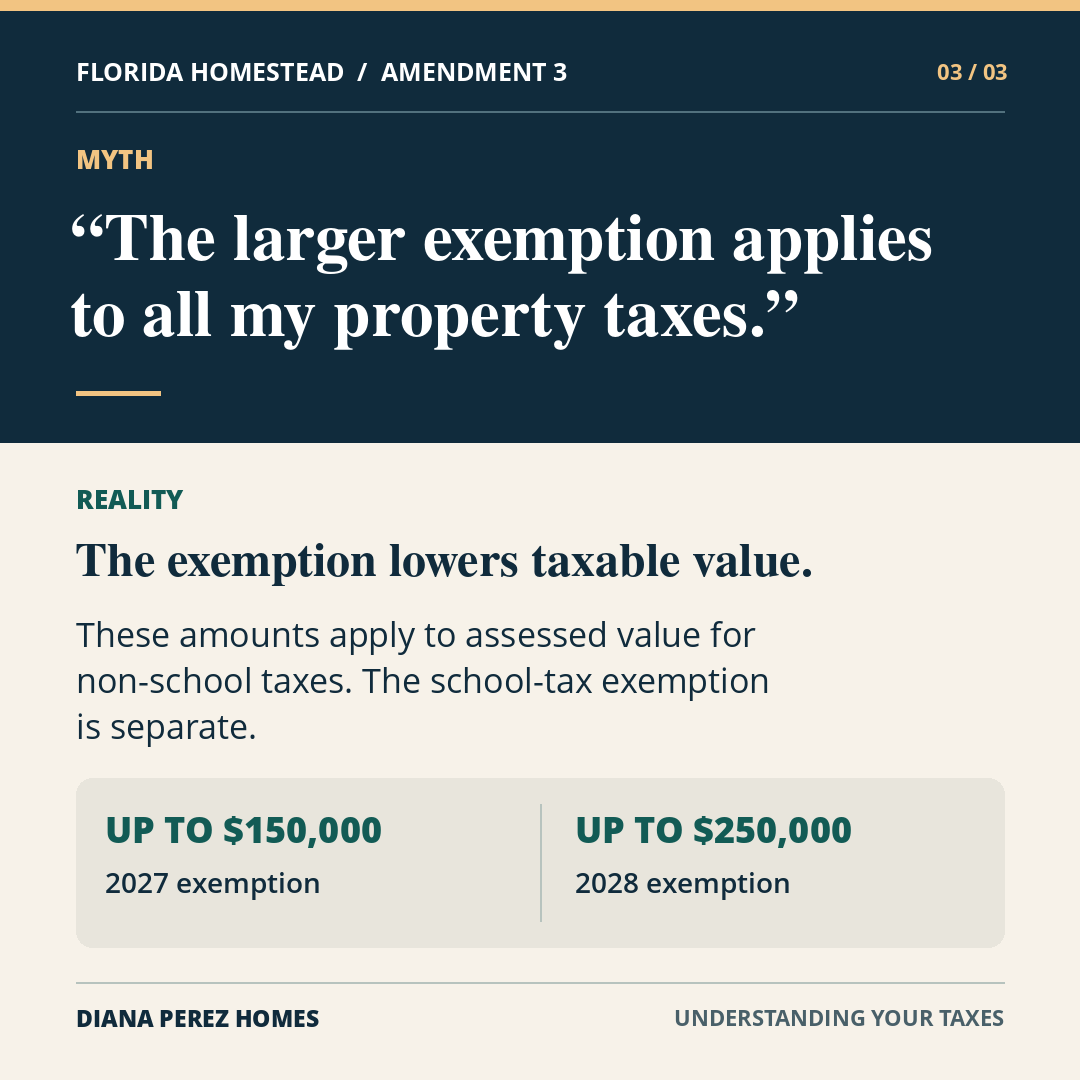
School taxes still apply. The bigger exemption covers county, city and other non-school taxes only. Property taxes don't go away.
Primary residences only. Second homes, rentals and commercial property don't get the homestead exemption.
Non-homestead owners get relief too. The annual cap on assessment increases for rentals, second homes and commercial property drops from 10% to 5% for non-school taxes.
Your other benefits stay. Senior and veterans' exemptions, Save Our Homes and portability remain in place.
The Dates That Matter
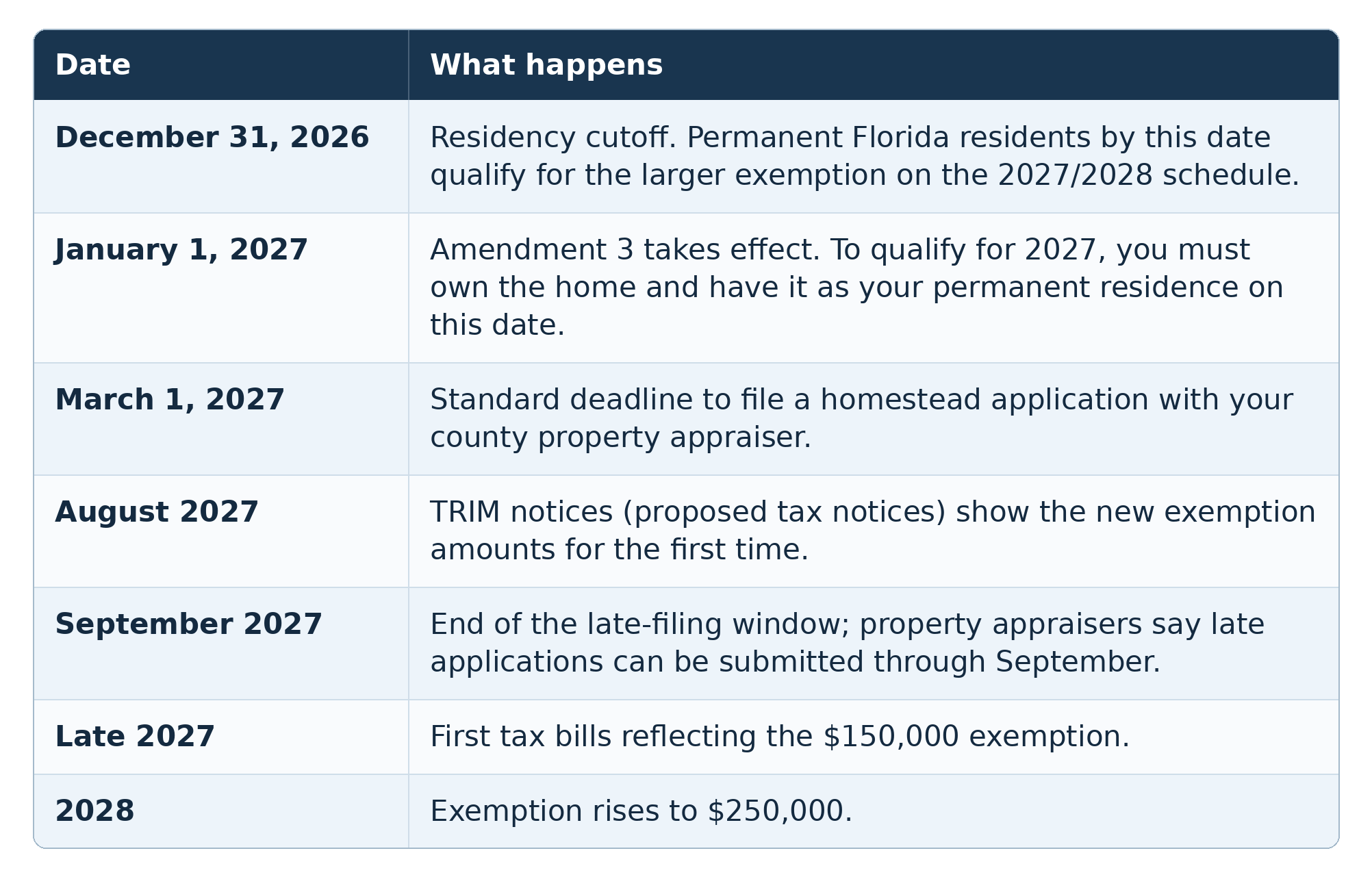
The single most important date is December 31, 2026: whether you're a permanent Florida resident by then decides when you get the bigger exemption.
Your 2026 tax bill (arriving this month) is not affected.
If You Move to Florida After December 31, 2026
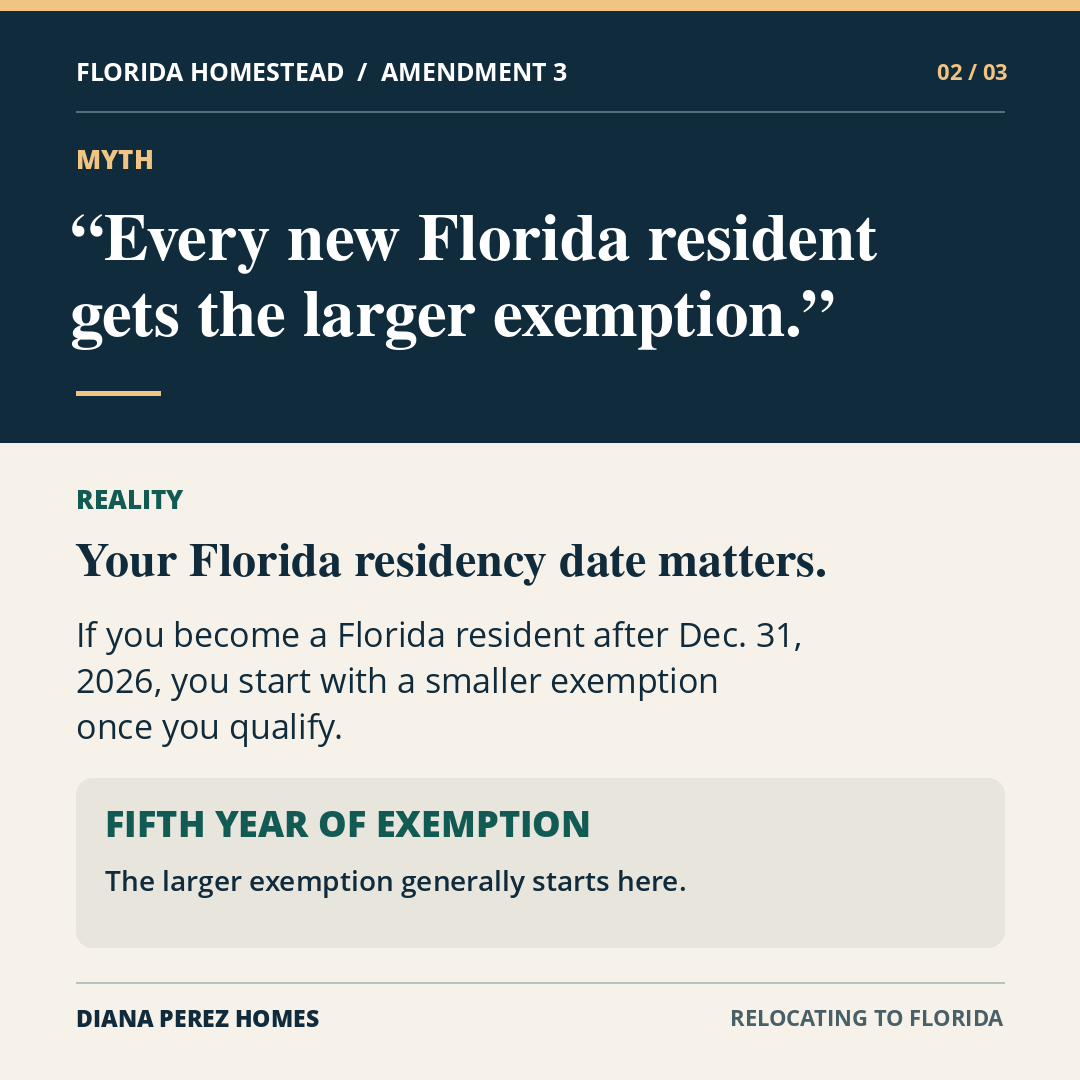
New residents start with the existing exemption of roughly $50,000. The larger exemption kicks in beginning the fifth year of holding a homestead exemption. Note: Buying a Florida home by itself doesn't make you a resident; what counts is genuinely establishing permanent residency here.
Do You Need to Apply?
If you already have a homestead exemption, you don't need to do anything. Broward, Miami-Dade and Palm Beach property appraisers have all confirmed they will apply the increase automatically, and Broward homeowners should receive a letter in January explaining their new exemption.
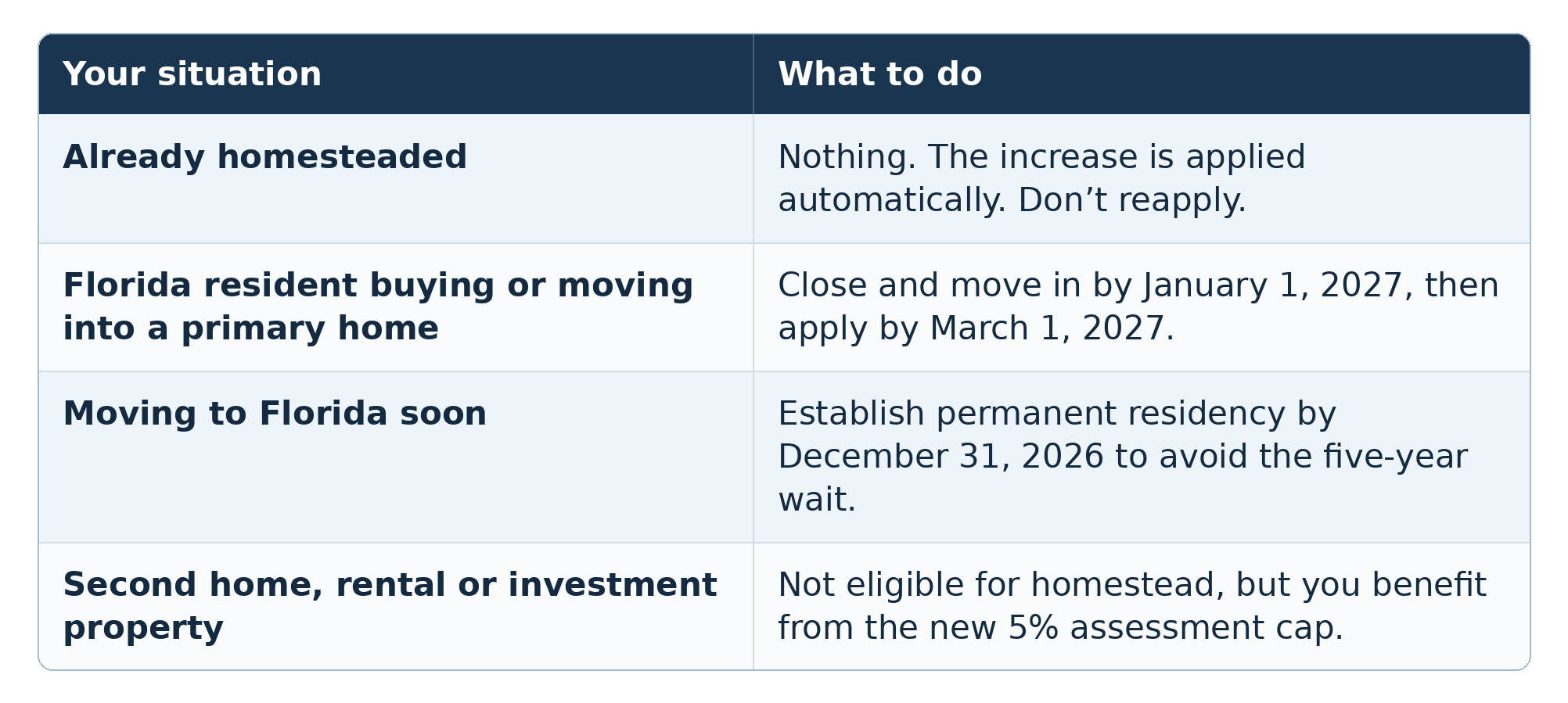
Do you need to apply?
Remember: You can only claim one residency-based exemption, so you can't hold a homestead in another state or on a second Florida property.
How to Apply For a Homestead Exemption
Confirm the home was your permanent residence and you owned it on January 1.
Gather proof of Florida residency, such as a Florida driver's license, vehicle registration and voter registration.
File online or in person with your county property appraiser:
Broward: bcpa.net
Miami-Dade: miamidadepa.gov
Palm Beach: pbcpao.gov
Watch for your August TRIM notice to confirm the exemption was applied.
Should You Wait Until 2028 to Buy?
No. Waiting doesn't get you a bigger exemption. The $250,000 exemption in 2028 applies to every qualifying homestead that year, whether the home was bought in 2025 or 2027. Waiting only means going longer without any homestead exemption.
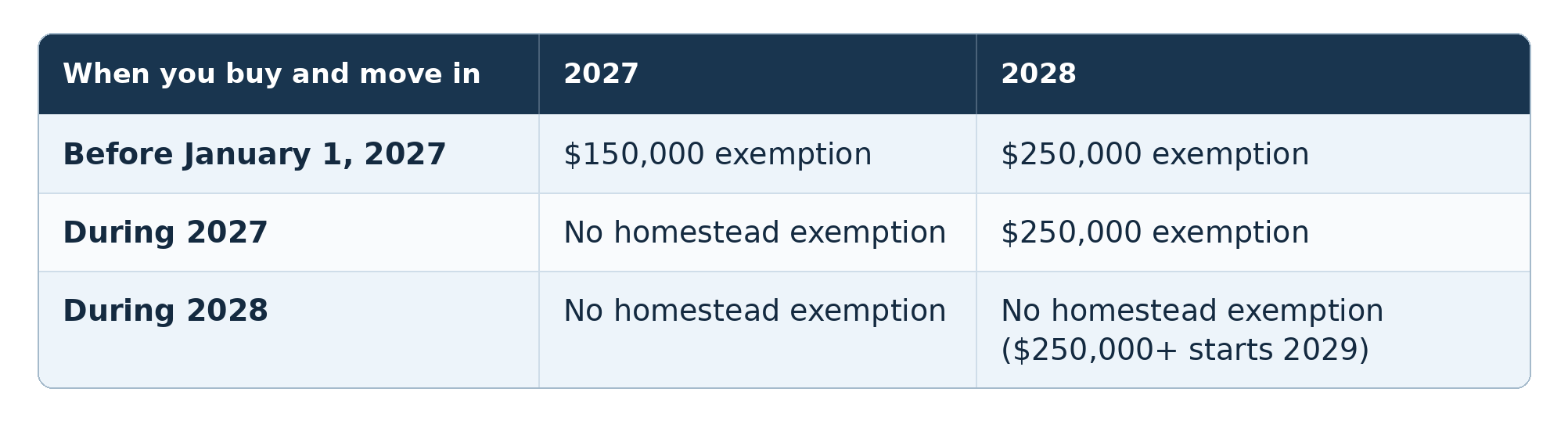
For a buyer who is already a Florida resident
Buying sooner also starts the Save Our Homes cap sooner. Once a home is homesteaded, yearly increases in its assessed value are capped at 3% or inflation, whichever is lower, so your taxable value stops chasing the market.
The date that rewards acting early is December 31, 2026, and it's about residency, not buying. New residents after that date start with the roughly $50,000 exemption and wait until their fifth year for the larger one.
The real reasons to wait (prices, mortgage rates, inventory, personal readiness) have nothing to do with Amendment 3.
What This Means if You're Buying or Selling
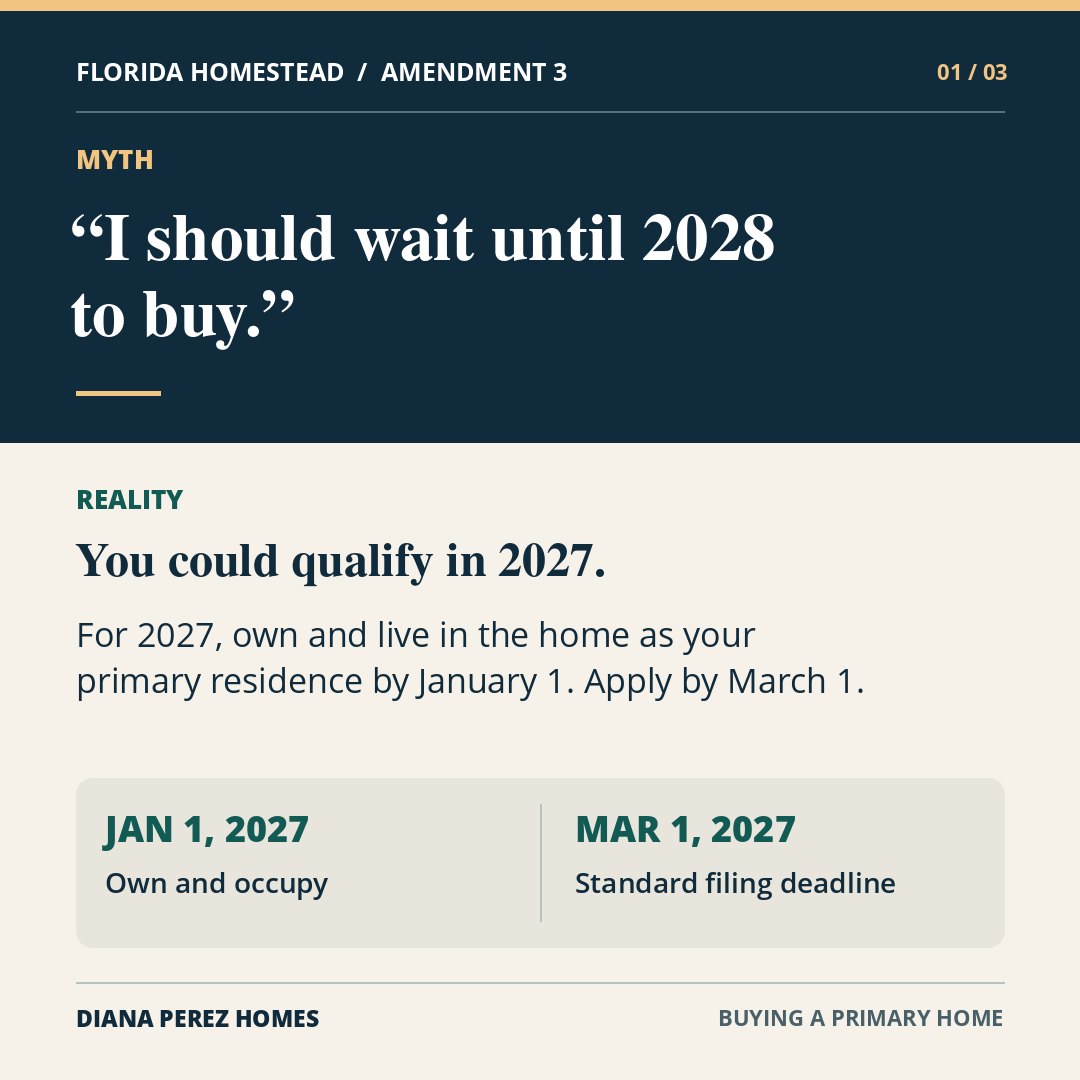
For buyers, timing just became part of the strategy. If you're already a Florida resident, closing on your primary home and moving in before January 1 means you can apply by March 1 and see the $150,000 exemption on your 2027 bill. Miss January 1, and you wait another year.
If you're relocating from out of state, the December 31, 2026 residency line is now a planning date. Even renting here and genuinely establishing residency before year-end can put you on the faster schedule when you buy later.
For sellers, a lower ongoing tax burden on primary homes is a selling point worth highlighting to resident buyers, especially in Broward, Miami-Dade and Palm Beach where values are high.
Thinking about buying before the deadline, or not sure which group you fall into? Reach out to Diana Perez Homes and let's map out your timeline together.
Disclaimer and Sources
This post is for general information only and is not tax or legal advice. Implementation details are still being finalized by state and county officials. Always confirm deadlines and eligibility with your county property appraiser or a tax professional.